Friday, August 22, 2025

Yeshua, Jesus, and the Divine Name: What’s in a Name?

Yeshua, Jesus, and the Divine Name: What’s in a Name?

Yeshua, Jesus, and the Divine Name: What’s in a Name?

Have you ever wondered why the name of Jesus looks so different from His original Hebrew name? And what about modern attempts to restore the Divine Name into that transliteration?

Where It All Began: Yehoshua and Yeshua

The Messiah’s original name in Hebrew was יהושע (Yehoshua), meaning “YHWH is salvation.” In later Hebrew and Aramaic texts, a shortened form appeared: ישוע (Yeshua).

From Hebrew to English: How Did We Get Jesus?

The name traveled through three major languages:

  • Hebrew: Yehoshua / Yeshua
  • Greek: Ἰησοῦς (Iēsous) – Greek had no “sh” sound and added -os.
  • Latin: Iesus → later English: Jesus
Infographic: Name Transmission Tree (Hebrew → Greek → Latin → English)

Myth vs. Fact

Myth: “The name Jesus comes from the Egyptian goddess Isis.”
Fact: There’s no linguistic or historical connection. Jesus derives from Hebrew Yehoshua, through Greek and Latin adaptations.

Modern Restorations: IEUESHUO’ and Beyond

Some believe names like IEUESHUO’ better honor the Divine Name by including letters from the Tetragrammaton (יהוה). But here’s the truth:

  • These forms are modern devotional constructs—not found in ancient manuscripts.
  • They remind us of God’s name, but they’re not historically authentic.

Should We Use Them?

If you want historical accuracy, use Yeshua or Yehoshua. If you’re emphasizing theology, forms like IEUESHUO’ can be meaningful—as long as you explain they’re interpretive, not original.

Quick Reference Table

FormPreserves YHWH?Historical?
YehoshuaYesYes
YeshuaYes (prefix)Yes
IēsousNoYes
IEUESHUO’YesNo

Final Thought:

The name Jesus isn’t a mistake—it’s the natural outcome of linguistic shifts. But understanding the Hebrew roots gives us a deeper appreciation of the meaning: “YHWH is salvation.”

“The past is never dead. It’s not even past.” — William Faulkner

Wednesday, August 13, 2025

Jewish Rome Through the Ages – History, Wars, and Neighborhood Maps


Timeline of Jewish Demographics in Rome

From the 2nd century BCE through the modern era—how wars and policies shifted the size and distribution of Rome’s Jewish community.

Summary: Rome’s Jewish population was proportionally largest before and during the early Imperial period. That status ended after the First Jewish–Roman War (66–73 CE), after which the community remained culturally significant but a smaller share of the city overall.

– Arrival in Rome

Context
Jews first came to Rome from the eastern Mediterranean as merchants, diplomats, and later captives from wars in Judea.
Demographics
Small but growing community along the Tiber, particularly in the Trastevere district.
Key Event
161 BCE—an official Judean delegation visits the Roman Senate.

– Pompey’s Conquest of Judea

Effect: Thousands of Jewish captives brought to Rome as slaves. Many were later freed, forming a distinct community that grew through trade and migration.


1st Century CE – Early Imperial Rome

Demographics: Jewish population estimated in the tens of thousands, possibly 5–10% of the city’s population.

Status: Visible community with multiple synagogues; relatively free to practice religion under certain emperors.


66–73 CE – First Jewish–Roman War

Key Turning Point: Siege and destruction of Jerusalem in 70 CE by Titus. Massive influx of Jewish captives to Rome (forced labor for public works, including the Colosseum). While the community grew numerically in the short term, the war marked the start of tighter Roman controls.

Aftermath: Jews were heavily taxed (Fiscus Judaicus) and politically marginalized.


2nd Century CE – Bar Kokhba Revolt (132–135 CE)

Effect: Harsh repression of Jews across the empire. Deportations and bans on entering Jerusalem further increased diaspora numbers in Rome, but integration and intermarriage diluted distinct identity.


Late Antiquity (3rd–5th Centuries)

Demographics: Still a significant minority but no longer close to the largest single group. Christianization of Rome reduced Jewish civic rights.


Middle Ages (6th–15th Centuries)

Key Changes: Papal dominance over Rome; Jews lived under special restrictions but maintained continuous presence. Community concentrated in certain neighborhoods, active in trade and medicine.

Demographics: Proportion dropped sharply due to Christian population growth and occasional expulsions.


1555 – Creation of the Roman Ghetto

Event: Pope Paul IV issued a papal bull confining Jews to a walled quarter.

Effect: Economic restrictions and segregation limited growth. Population: By the 17th century, about 3,000–4,000 Jews lived in the Ghetto—small relative to the city’s total.


19th Century – Emancipation

Napoleonic Period: Ghetto briefly abolished, then reinstated after papal restoration.

1870: The Kingdom of Italy captured Rome; Ghetto walls demolished; Jews gained full citizenship. Population: ~5,000–6,000.


20th Century

Fascist Era: 1938 racial laws stripped Jews of rights; 1943 Nazi occupation led to deportations to Auschwitz.

Post‑War: Community rebuilt but remained a small minority—today about 13,000–15,000 in a city of ~2.8 million.


Historical Map & Legend

Here is a map showing Rome’s Jewish neighborhoods from the 1st century CE through the Ghetto era—tying major wars and policies to physical space in the city.

Historical map of Rome marking Jewish neighborhoods: Trastevere (early), expansions in the 1st century CE, areas from the 2nd–15th centuries, and the Roman Ghetto (1555–1870).
Map: Jewish neighborhoods in Rome across periods (label colors match the legend).


Legend explaining the map’s color coding for Jewish neighborhoods and the Tiber River.

Legend: Color key for neighborhoods and the Tiber River.

© . Educational, non‑commercial use permitted with attribution.

Saturday, August 9, 2025

EOSTRE ISHTAR EASTER Transliterations of American Coronets

The Hidden Goddesses Behind Easter: Eostre, Ishtar & the Mystery of Spring

What if Easter—a cornerstone of Christian tradition—has roots stretching far deeper into the soil of ancient fertility rites and goddess worship? Behind the celebration of resurrection and renewal lies a tangle of ancient names: Eostre, Ishtar, and the dawn goddesses of old.

Eostre was mentioned by the Venerable Bede as an Anglo-Saxon goddess of spring, whose feast month gave rise to the English name for Easter. Though little archaeological evidence exists, her name lives on in linguistic traditions and the symbols of hares and eggs.

Ishtar, by contrast, ruled the ancient skies of Mesopotamia—goddess of love, war, and fertility. Her most famous myth is a descent into the underworld and resurrection, a tale of cyclical death and rebirth echoing the agrarian rhythms of the Earth.

Ishtar, in Mesopotamian religion, goddess of war and sexual love. Ishtar is considered a member of the special class of Mesopotamian gods called the Anunnaki. Ishtar is the Akkadian counterpart of the West Semitic goddess Astarte.

The King James Version (KJV) translators chose to use the word "Easter" in Acts 12:4, following the lead of William Tyndale's earlier English translation. Tyndale, in his 1534 New Testament, had used "Easter" to translate the Greek word pascha, which is typically translated as "Passover". The KJV translators, in turn, used Tyndale's translation as a basis for their work. 

Here's a more detailed breakdown:

Tyndale's Influence:

Tyndale was the first to translate the Bible into English from the original Greek and Hebrew texts, and his work heavily influenced subsequent English translations. 

"Pascha" and "Easter":

The Greek word pascha refers to the Passover festival, but Tyndale chose to use "Easter" in some instances, including in Acts 12:4. 

The KJV's Decision:

The KJV translators, while revising the Bishop's Bible, ultimately retained "Easter" in Acts 12:4, even though other English translations, like the Geneva Bible, used "Passover". 

Reasons for Keeping "Easter":

Some scholars suggest the KJV translators may have done so to maintain consistency with the Roman equivalents of proper names in other parts of the book, or perhaps because "Easter" was a more familiar term in that context. 


The Easter–Astarte Confusion

The name "Easter" is often mistakenly associated with Astarte, a Phoenician goddess of fertility and the moon. However, this connection is not accurate. Easter is actually rooted in the Anglo-Saxon goddess Eostre, celebrated during the spring equinox, and the name was later attached to the Christian celebration of the resurrection of Jesus.

The Hebrew Bible often uses the name Ashtoreth (a variant of Astarte) and plural "Ashtaroth" to refer to foreign goddesses and paganism in general, often with negative connotations and condemnations of their worship.

It's important to approach these historical and religious figures with a critical perspective, recognizing that understandings can change with new discoveries and analysis.

While Astarte was worshipped in various cultures including the Phoenicians and Babylonians and was associated with fertility and lunar cycles, the English word "Easter" comes from the Old English Ēostre, a distinctly pre-Christian spring goddess. The  confusion in the King James Version written of by the Cornetts arises due to the similar phonetics and overlapping themes of spring and fertility.

  • Easter: Derives from Eostre, the Anglo-Saxon goddess celebrated at the spring equinox.
  • Astarte: A Phoenician goddess of fertility and the moon, often equated with Ishtar in Babylon.
  • The Confusion: Similar names and shared symbolism have led to the false belief that Easter originated from Astarte worship. 

In essence, while both Astarte and Eostre are goddesses of fertility and spring, the name "Easter" is rooted in Eostre, not Astarte.

For a popular explanation of the Easter-Ishtar connection myth, see this video: Watch here.

Comparative Table: Eostre, Ishtar, and Easter

Aspect Origin Season Key Themes Symbols Festivals Language Influence Resurrection Motif Worship Centers
Eostre Anglo-Saxon / Germanic Spring (Ēosturmōnaþ) Dawn, fertility, rebirth Hare, eggs, flowers Spring equinox feasts (speculative) English: 'Easter'; German: 'Ostern' Implied seasonal rebirth No known temples
Ishtar Mesopotamian (Sumerian → Akkadian) Spring (linked to Venus cycles) Love, war, fertility, descent/resurrection Lion, star, planet Venus Akitu, sacred marriage rites Cognate of Astarte; echoes in 'Ishtar Gate' Descent into underworld and return Uruk, Babylon, Nineveh
Easter (Christian) Christian tradition (2nd century CE onward) Spring (linked to Passover) Resurrection of Christ, new life Cross, lamb, egg, lily Pascha (Easter) Latin: 'Pascha'; Greek: 'Πάσχα' Jesus' death and resurrection Churches worldwide (from Jerusalem)

Here’s a chronological cultural diffusion chart from a biblical–archaeological perspective, tracing the movements and intersections of Isis, Ishtar, and Astarte into the biblical world — and showing why Eostre stands apart.

Chronological Cultural Diffusion Chart

A biblical–archaeological perspective tracing the movements and intersections of Isis, Ishtar, and Astarte into the biblical world — and showing why Eostre stands apart.

Isis • Ishtar • Astarte • Eostre — timeline highlights
Date Range (BCE/CE) Cultural Milestone Isis (Egypt) Ishtar (Mesopotamia) Astarte (Canaan/Phoenicia) Eostre (Germanic Europe)
c. 3000–2000 BCE Early high cultures Cult centered in Nile Valley as protector and throne goddess Akkadian/Babylonian–Assyrian worship; Venus cycles Proto-Canaanite fertility goddess emerges; related to Ishtar Not yet attested
c. 2000–1500 BCE Middle Kingdom / Old Babylonian Isis expands within Egyptian pantheon Ishtar worship codified in Hammurabi’s Babylon Astarte appears in Ugaritic pantheon Not yet attested
c. 1500–1200 BCE New Kingdom Egypt / Late Bronze Age Egypt expands into Canaan; Isis present alongside Hathor Ishtar spreads west via trade & diplomacy Astarte adopted in Egypt as warrior/fertility goddess Not yet attested
c. 1200–1000 BCE Early Iron Age Isis remains primarily Egyptian Neo-Assyrian empire promotes Ishtar across Levant Biblical references to fertility cults parallel Astarte Not yet attested
c. 1000–586 BCE Monarchic Israel & Judah Limited Egyptian cultic influence Possible link to “Queen of Heaven” in Jeremiah “Ashtoreth” condemned; pillar figurines match Astarte type Not yet attested
586–332 BCE Exilic & Persian Period Isis cult begins Mediterranean expansion Ishtar declines; persists in hybrid forms Astarte spreads via Phoenician colonies Not yet attested
332 BCE – 1st c. CE Hellenistic–Roman Levant Isis flourishes in coastal cities Ishtar absorbed into Aphrodite/Venus Astarte merges with Aphrodite; name fades Not yet attested
1st–4th c. CE Early Christian period Isis present in Roman Palestine; possible symbolic echoes Ishtar no longer distinct Independent worship gone Not yet attested
5th–8th c. CE Early Medieval Europe Isis extinct Ishtar extinct Astarte extinct First mention of Eostre (Bede)
Post–8th c. CE Medieval Christianity Memory preserved in texts/artifacts Eostre’s name survives in “Easter” / “Ostern”


Interpretive Notes


Isis, Ishtar, and Astarte are part of the interconnected religious network of the ancient Near East and Mediterranean. Through conquest, trade, and cultural assimilation, they influenced the biblical world both directly (Astarte/Ashtoreth in Israel) and indirectly (Isis via Egyptian and Greco-Roman presence; Ishtar possibly through “Queen of Heaven” cults).

Eostre, by contrast, emerges in a completely different cultural and chronological context — post-biblical, early medieval, northern European — with no archaeological connection to the Levant or Mediterranean.

From a biblical–archaeological standpoint, Isis is not named in either the Hebrew Bible or the New Testament.

Reason for absence: Hebrew scripture rarely names Egyptian gods individually, and Isis’s cult remained mostly confined to Egypt until after the Hebrew Bible was complete. Named deities in Scripture (e.g., Baal, Ashtoreth, Chemosh) are those directly linked to Israel’s idolatry.

Geographic factor: Isis’s worship only spread into the Levant in the Hellenistic and Roman periods, centuries after the Old Testament was closed.

Related overlap: The “Queen of Heaven” in Jeremiah likely refers to Ishtar or Astarte, not Isis.

NT period: Though Isis temples existed in Roman-era Judea, the New Testament does not mention her.

Isis’s biblical absence is due to timing and geography; any connection to biblical goddesses is indirect, via syncretism with Astarte or Ishtar.

However, the theological name of Jesus is found in Greek Ieso\us, from Hebrew Yeshua/Yehoshua (“YHWH is salvation”).

There's no linguistic link to Isis.

Likely fueled by writers like Gerald Massey and Tom Harpur, who drew broad (but flawed) parallels between Christianity and Egyptian religion.

Likewise, a side-by-side linguistic family tree diagram clearly shows:

Yeshua → Jesus: Hebrew origin, moving through Greek (Iēsous) and Latin (Iesus) into English.

Ast/Aset → Isis: Egyptian origin, passing through Greek (Isis) and retaining the same in Latin and English.

This visual makes it obvious there’s no linguistic intersection between the two name lines, reinforcing that the “Name of Jesus originates from Isis” claim is a fallacy.

Methodology for Linguistic Verification

1. Primary Source Analysis

  • Hebrew Origin: Examine occurrences of ישוע (Yeshua) and יהושע (Yehoshua) in the Hebrew Bible and Second Temple inscriptions, confirming their meaning as “YHWH is salvation.”
  • Greek Transliteration: Analyze Septuagint renderings of Hebrew names into Greek (Ἰησοῦς, Iesous), noting:
    • Loss of the “sh” (ש) sound in Greek → replaced with “s” (σ).
    • Masculinizing suffix -ο`ς in nominative form.
  • Egyptian Name Isis: Review Egyptian hieroglyphic form (Ast or Aset) and Greek rendering (Ἶσις), confirming a separate root and phonetic structure.

2. Phonetic and Morphological Comparison

Feature comparison of name forms
Feature Yeshua / Yehoshua Iesous (Greek) Isis (Greek)
Origin Language Hebrew Greek Egyptian → Greek
Consonant Root Y-Š-ʿ or Y-H-Š-ʿ Adapted from Hebrew ʾ-S-T / ʾ-S
Meaning “YHWH is salvation” Same meaning as Hebrew “Throne” (Egyptian Ast)
Shared Root? Yes, with Hebrew No

Conclusion from phonology: No shared consonantal root, no semantic overlap.


3. Diachronic Linguistic Timeline

  • c. 1400–400 BCE: Hebrew Yehoshua / Yeshua in biblical and post-exilic contexts.
  • 3rd–2nd c. BCE: Septuagint uses Iesous for Joshua and other Yeshua-bearing figures.
  • 1st c. CE: Iesous used in Greek gospels for Jesus of Nazareth.
  • Post–1st c. CE: Latin Vulgate adopts Iesus → English Jesus.

No stage in this transmission passes through the Egyptian Isis form.


4. Evaluation of Fallacy’s Origin

  • 19th c.: Gerald Massey popularizes speculative links between Christian figures and Egyptian deities without formal linguistic proof.
  • Late 20th–21st c.: Tom Harpur (The Pagan Christ, 2004) advances thematic parallels between Egyptian religion and Christianity, indirectly encouraging reinterpretations—though without claiming Jesus derives from Isis.

These are comparative mythology arguments, not linguistically supported derivations.


Conclusion of Inquiry

  1. Distinct Etymology: Jesus stems from a Hebrew theophoric name (“YHWH is salvation”), passing through Greek and Latin adaptations.
  2. No Phonetic Link: Iesous and Isis differ in root consonants, vowels, and morphology.
  3. No Historical Transmission Path: There is no documented stage where the Egyptian Isis name would replace or alter the Hebrew-Greek transmission of Yeshua.

Therefore:“The origin of the name of Jesus is from Isis” theory is a linguistic fallacy rooted in modern mythicist speculation, not in historical philology.


Layers of Meaning

Over millennia, the sacred feminine evolved—first as Earth mothers and sky queens, then as state-sanctioned goddesses, and later as figures suppressed or subsumed under patriarchal religions. Eostre and Ishtar were not the same, but they reflect overlapping motifs: the dawn light, renewal, fertility, and the cycle of death and rebirth.

Today’s Easter eggs, mousy bunnies, and sunrise services are cultural palimpsests—layers of symbolic inheritance. Whether you see it through the lens of Christian theology, Isa 66:4, Neopagan revival, Lev 19:4,19, or historical curiosity, Easter bears the hidden signature of ancient women once worshiped beneath stars, at dawn, in spring.

“The past is never dead. It’s not even past.” —William Faulkner


Monday, April 21, 2025

Sabbath Communion: Breaking Challah for Blessing and Healing

Sabbath Communion: Breaking Challah for Blessing and Healing

Sabbath Communion: Breaking Challah for Blessing and Healing

Throughout Scripture, bread is more than food — it is a sacred sign of God's covenant, provision, and healing power. Celebrating communion on the seventh day (Sabbath) with artos or challah bread revives this rich biblical symbolism.

Genesis 2:3 tells us, "God blessed the seventh day and made it holy." Sabbath is a day of divine blessing and rest. Breaking blessed bread on this day connects us to God's creative and redemptive power.

In the Tabernacle, fresh bread (the "showbread") was laid before the Lord every Sabbath (Leviticus 24:5–8), a sign of His continual fellowship. Jesus, the true Bread of Life (John 6:35), invites us to partake of Him regularly — renewing covenant, receiving healing (1 Corinthians 11:29–31), and celebrating resurrection life.

Challah, a sweet leavened bread, beautifully represents risen life, covenant unity, and the goodness of God's promises (Psalm 34:8). It aligns with the symbolism of Christ, the Firstfruits of new creation (1 Corinthians 15:20), who rose on the day after Sabbath (John 20:1).

When we break challah or artos in communion on the Sabbath, we step into a full biblical cycle of blessing, healing, covenant renewal, and resurrection hope — a foretaste of the eternal Sabbath rest to come (Hebrews 4:9–10).

"Taste and see that the Lord is good!" (Psalm 34:8)

Powered by AI Assistance | Content created with guidance from Scriptural references and Christian tradition.

Tuesday, April 15, 2025

“Yeshua vs. Marcion: Rediscovering the One True God of Scripture and Covenant”


Yeshua vs. Marcion: Rediscovering the One True God of Scripture and Covenant

A sacred journey through time and text—where Yeshua walks not apart from the ancient flame, but within it. Here, the God of Sinai and the God of the Cross are one and the same. We trace the golden thread of covenant, woven from Genesis to Revelation, and cast off the shadows of division to behold the beauty of a unified, eternal Name.


Philosophical Comparison: Yeshua vs. Marcion’s Jesus

Aspect Torah-Observant Yeshua Marcion’s Jesus
Relationship to God One with the God of Abraham, Isaac, and Jacob. Rejects the Hebrew God as a lower, harsh being (Demiurge).
View of the Torah Fulfills and honors the Torah; lives it deeply. Rejects the Torah as flawed and outdated.
Connection to Israel Rooted in Jewish identity, feasts, and promises. Detached from Israel and its traditions.
Purpose of Salvation Restores relationship with the Creator through covenant. Rescues people from the Creator and the material world.
View of Scripture Affirms and fulfills the Hebrew Scriptures (Tanakh). Rejects much of the Bible, keeping only altered texts.
Human Responsibility Calls people to covenant faithfulness with grace. Offers escape without moral responsibility.
Philosophical Tone Harmony of justice and mercy, rooted in history. Dualistic escape from the world, abstract and disconnected.

Philosophical Reflection for the Heart:

If you’ve ever felt guilt, shame, or confusion because of how harsh “God” was presented—
know that Marcionism still echoes today,
often hiding in teachings that say the Old Testament God is mean, or that the Law is bad.

But the true Yeshua is not at war with the God of Moses.
He is the embodiment of that very God’s mercy and faithfulness.
He did not come to cancel the story of Israel, but to complete it with compassion, purpose, and truth.

So if your soul feels torn between a cold judge and a distant savior—breathe.
That is not the voice of Yeshua.
He is the Good Shepherd who knows His sheep—and who walks fully
in the light of Torah, not in rejectioon of it.


Meditation: The True Light of Yeshua


Breathe deep, O soul, for the path is not split.
The voice of Yeshua echoes not against Moses, but walks beside him.

The Torah was not a prison, but a promise.
And Yeshua did not come with fire to burn it,
but with flame to fulfill it.

Do not fear the ancient mountain, for the smoke has cleared,
and the same God who thundered on Sinai,
whispers now in gentleness through His Son.

This is not a tale of two gods,
but of One love unfolding through time—
Just and kind, firm and faithful.

Yeshua is not the stranger come to save us from the Creator,
He is the very Word of the Creator, become flesh, to bring us home.

He did not call us away from covenant, but deeper into it.
So rest now—not in escape, but in embrace.
Not in rejection, but return.

The God of Israel has not changed.
And Yeshua is His clearest face.


Final Blessing

בָּרוּךְ אַתָּה יְיָ אֱלֹהֵינוּ מֶלֶךְ הָעוֹלָם
Baruch Atah Adonai Eloheinu Melech ha'olam
Blessed are You, Lord our God, King of the Universe,
who reveals His unity through His Word, and draws us into His everlasting covenant.

May we walk in the light of Yeshua (ישוע), trust the goodness of Hashem (השם), and carry the wisdom of the whole story into every step of our lives.

Shalom and blessings on your journey!

Saturday, April 12, 2025

Full Passover (Pesach) Household Prep Guide

PASSOVER CHAMETZ REMOVAL CHECKLIST


Remove or Sell the Following Items:

A. Chametz Foods (Leavened Grain Products):

[ ] Bread, bagels, pita, rolls
[ ] Pasta, noodles
[ ] Crackers, cookies, cakes, cereal
[ ] Beer, whiskey, vodka (grain-based)
[ ] Flour (not labeled Kosher for Passover)
[ ] Breadcrumbs, croutons
[ ] Soups/sauces with flour or chametz thickeners
[ ] Baking mixes (pancake, cake, etc.)

B. Leavening Agents:

[ ] Sourdough starter
[ ] Brewer’s yeast
[ ] Dry yeast (unless Kosher for Passover)
[ ] Beer sediment or brewing kits
[ ] Fermented grain drinks (e.g. kvass)

C. Areas to Clean:

[ ] Toaster (remove crumbs)
[ ] Breadbox
[ ] Pantry shelves
[ ] Refrigerator and freezer
[ ] Kitchen drawers and counters
[ ] Chametz utensils/pots (store or kasher if needed)

What to Do with Chametz:

[ ] Burn or destroy chametz before Passove
[ ] Sell chametz through a rabbi or online service
[ ] Seal and label sold chametz clearly: “Sold – Do Not Open”


This guide combines a comprehensive household chametz checklist with a leavening agent cheat sheet to help you prepare your home for Passover according to halacha (Jewish law).

1. Food Items


Item | Chametz? | What to Do

Bread, crackers, pasta | Yes | Destroy or sell before Passover

Flour (wheat, barley, etc.) | Yes | Destroy or sell

Oats | Yes | Destroy or sell

Beer, whiskey, vodka | Yes | Sell if valuable, or destroy

Soy sauce | Usually | Avoid or sell

Cereal | Usually | Destroy or sell

White vinegar | Maybe | Avoid unless certified Kosher for Passover

Apple cider vinegar | Maybe | Avoid unless certified KFP

Wine | No | (KFP) Use only if Kosher for Passover

Coffee, tea (plain) | No | OK if unflavored and certified KFP (best)

Spices | Maybe | Use only with KFP certification

Sugar, salt, pepper | No | OK if pure and without additives

Honey, oil | No | Use only if KFP certified

Baking soda (bicarb) | No | Keep — safe for Passover use

Baking powder | Maybe | Use only if KFP certified

Nutritional yeast | No | Keep or use KFP-certified version

Vinegar-based sauces | Usually | Sell or destroy

Chocolate, candy, gummies | Usually| Avoid unless KFP certified

Keto/health snacks | Usually | Avoid or sell unless certified

2. Cleaning Products


Item | Chametz? | What to Do

Dish soap | No | Keep

Laundry detergent | No | Keep

Bleach, ammonia | No | Keep

Window cleaner | No | Keep

Surface sprays | No | Keep

Vinegar-based cleaners | No | Keep (not for food use)

3. Personal Care / Medicine


Item | Chametz? | What to Do

Toothpaste | Maybe |  Replace with KFP version if possible

Mouthwash  | Maybe | Replace or avoid

Shampoo, soap | No | Keep

Lotion, cosmetics | No | Keep unless flavored

Lip balm/lipstick  | Maybe | Replace with KFP if flavored

Vitamins, supplements  | Maybe | Replace with KFP or check ingredients

OTC meds (tablets)  | Maybe | Consult rabbi or approved list

Prescription meds | Allowed | Use — health takes priority

4. Kitchen & Cooking Tools


Item | Chametz? | What to Do

Toaster, toaster oven  | Yes | Clean thoroughly or don’t use on Pesach

Baking sheets, pans  | Yes | Kasher if possible or set aside

Dish sponge  | Maybe | Replace with a new one

Plasticware (new) | No | Use freely

Aluminum foil, paper towels | No | Use freely

Cutting boards  | Yes | Kasher or set aside

5. Leavening Agent Cheat Sheet


Leavening Agent | Chametz? | Notes

Sourdough Starter  | Yes | Made from grain + water, actively ferments

Baker's Yeast  | Maybe | Needs KFP due to grain-based growth

Brewer’s Yeast  | Yes | From beer production (grain) — chametz

Dry Yeast (instant/active)  | Maybe | Often needs KFP certification

Nutritional Yeast | No | Deactivated, not from grain — safe

Baking Soda | No | Mineral, chemical leavening — safe

Baking Powder  | Maybe | May contain starch — needs KFP

Cream of Tartar | No | Byproduct of wine — safe

Ammonium Bicarbonate | No | Chemical — not chametz

Carbonated Water | No | Gas-based — not chametz

Self-rising Flour  | Yes | Contains wheat + leavening — chametz

Soda Bread Mix  | Yes | Contains chametz — avoid


Item,Chametz?,Kitniyot?,Ashkenazi Status,Sephardi Status

Wheat,Yes,No,Forbidden,Forbidden
Barley,Yes,No,Forbidden,Forbidden
Rye,Yes,No,Forbidden,Forbidden
Oats,Yes,No,Forbidden,Forbidden
Spelt,Yes,No,Forbidden,Forbidden
Rice (white/brown),No,Yes,Avoid,Permitted
Corn,No,Yes,Avoid,Permitted
Cornstarch,No,Yes,Avoid,Permitted
Lentils,No,Yes,Avoid,Permitted
Beans,No,Yes,Avoid,Permitted
Soy,No,Yes,Avoid,Permitted
Peas,No,Yes,Avoid,Permitted
Millet,No,Yes,Avoid,Permitted
Mustard seeds,No,Yes,Avoid,Permitted
Couscous,Yes,No,Forbidden,Forbidden

Thursday, March 6, 2025

Where Jesus Preached

The Synagogue of Capernaum: A Comparative Study of Ancient Structures

Introduction: The Synagogue of Capernaum

The synagogue at Capernaum, located on the shores of the Sea of Galilee, is a remarkable structure from the Iron Age that continues to captivate historians and architects alike. Built during the first century CE, this ancient place of worship stands as a testament to early Jewish architectural ingenuity and design. Its limestone foundation and rectangular layout offer a glimpse into the architectural practices of the time.

In this post, we’ll explore the advantages and disadvantages of the Capernaum synagogue's structure, comparing it with other notable ancient constructions: Western Hillforts, Scots Brochs, and Britton Roundhouses.

Advantages and Disadvantages of the Synagogue at Capernaum


The synagogue at Capernaum is one of the most significant archaeological sites in Israel. The structure features a large, rectangular layout, built with carefully dressed limestone. Here are some of the pros and cons of this ancient structure.

  • Pros:
    • Durable Materials: The use of locally sourced limestone ensured a durable and long-lasting structure, resistant to the wear of time.
    • Spacious Interior: With its large, open interior, the synagogue could accommodate large numbers of people, reflecting its role as a community gathering place for worship and discussion.
    • Cultural and Religious Significance: The synagogue’s design is deeply rooted in Jewish traditions, emphasizing the importance of prayer and community gatherings.
  • Cons:
    • Vulnerability to Environmental Factors: As a stone structure, it could be vulnerable to weathering over time, particularly during periods of neglect or extreme environmental conditions.
    • Lack of Defensive Features: Unlike other Iron Age structures designed for defense, the synagogue at Capernaum was purely for worship and community use, lacking any fortifications.

Western Hillforts, Scots Brochs, and Britton Roundhouses

Now, let’s compare the synagogue at Capernaum with other ancient structures known for their defensive and domestic purposes. These include Western Hillforts, Scots Brochs, and Britton Roundhouses. Each of these structures has its own unique advantages and disadvantages.

Western Hillforts

Western Hillforts, found in prehistoric Europe, were typically constructed atop hills to offer natural defensive advantages. The fortifications consisted of strong walls, sometimes made of stone or wood, along with ditches and palisades.

  • Pros:
    • Strategic Location: The elevated positions provided excellent vantage points for spotting enemies.
    • Defensive Strength: The thick walls and ditches offered protection from invaders, making them ideal for settlements in hostile environments.
  • Cons:
    • Isolation: While offering protection, hillforts could be difficult to access, leading to isolation from other communities.
    • Resource-Intensive Construction: The construction of such strong fortifications required significant resources and labor.

Scots Brochs

Scots Brochs were unique round stone towers built in Scotland during the Iron Age. These structures were often multi-storied and served both defensive and domestic purposes.

  • Pros:
    • Defensive Capabilities: The tall, thick walls provided significant protection against invaders and the harsh Scottish climate.
    • Multi-functional: Brochs could serve as homes, storage spaces, and places of refuge during times of conflict.
  • Cons:
    • Complex Design: Building brochs was labor-intensive due to their complexity and the need for skilled stonemasonry.
    • Limited Space: The interior of a broch was relatively small and could only house a limited number of people, making it less ideal for large communities.

Britton Roundhouses


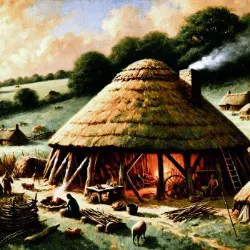
Britton Roundhouses were common throughout Britain during the Iron Age. These structures were typically made of wattle and daub with thatched roofs, built in circular shapes.

  • Pros:
    • Efficient Use of Local Materials: Roundhouses were made from locally sourced wood and clay, making them relatively inexpensive and efficient to build.
    • Versatility: The round shape allowed for efficient space usage and flexibility in terms of interior design.
  • Cons:
    • Limited Durability: The materials used in roundhouses, such as wattle and daub, were less durable than stone, making them susceptible to weathering and decay over time.
    • Vulnerability: Without defensive fortifications, these structures were vulnerable to attack from raiders or rival tribes.

Conclusion

Each of these ancient structures—the Synagogue at Capernaum, Western Hillforts, Scots Brochs, and Britton Roundhouses—offers unique insights into the architectural practices and needs of their respective cultures. While the synagogue stands out for its religious and communal significance, the other structures emphasize defensive capabilities and domestic use. The choice of materials, layout, and function all played crucial roles in shaping how these ancient communities lived and thrived.

Whether it’s the durability of stone or the adaptability of wooden roundhouses, the comparison between these structures illustrates the diverse approaches to architecture that catered to different needs—whether for defense, community, or worship.

AI Accreditation: This blog post was generated with the assistance of AI technology. All content is crafted by an AI model designed to assist with research and writing tasks, providing a comprehensive and informative comparison of ancient architectural structures.